

THE LINUX FOUNDATION PROJECTS

OCUCU Technical Project

The OCUDU Technical Project is a permissively licensed, open source 5G and beyond CU/DU project designed for commercial deployment, broad industry adoption, and advanced research and development. It is a complete RAN solution aligned with 3GPP and O-RAN Alliance specifications and includes the full L1/L2/L3 stack with minimal external dependencies.

OCUDU Technical Project is hosted by the Linux Foundation’s OCUDU Ecosystem Foundation
A collaborative program hosted by the Linux Foundation dedicated to accelerating open, secure, and interoperable Open RAN CU/DU implementations.
Get StartedCode the CodeMembership Inquiries

Latest News

Key Objectives of the OCUDU Ecosystem Foundation

Create a public-private commercial and research ecosystem and an open source stack for open source CU and DU (part of Open RAN)

House the OCUDU Technical project and other associated open source projects over time

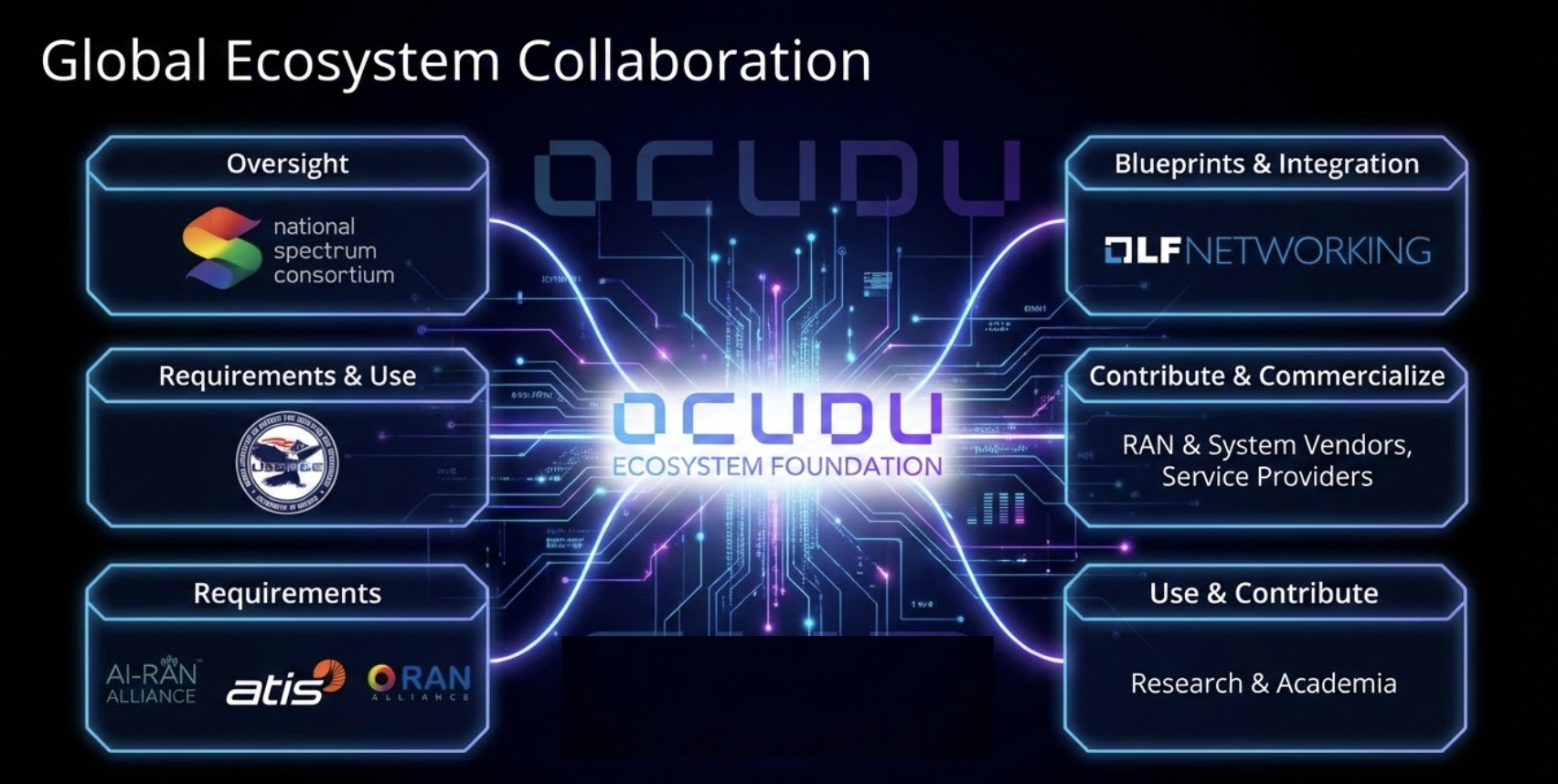
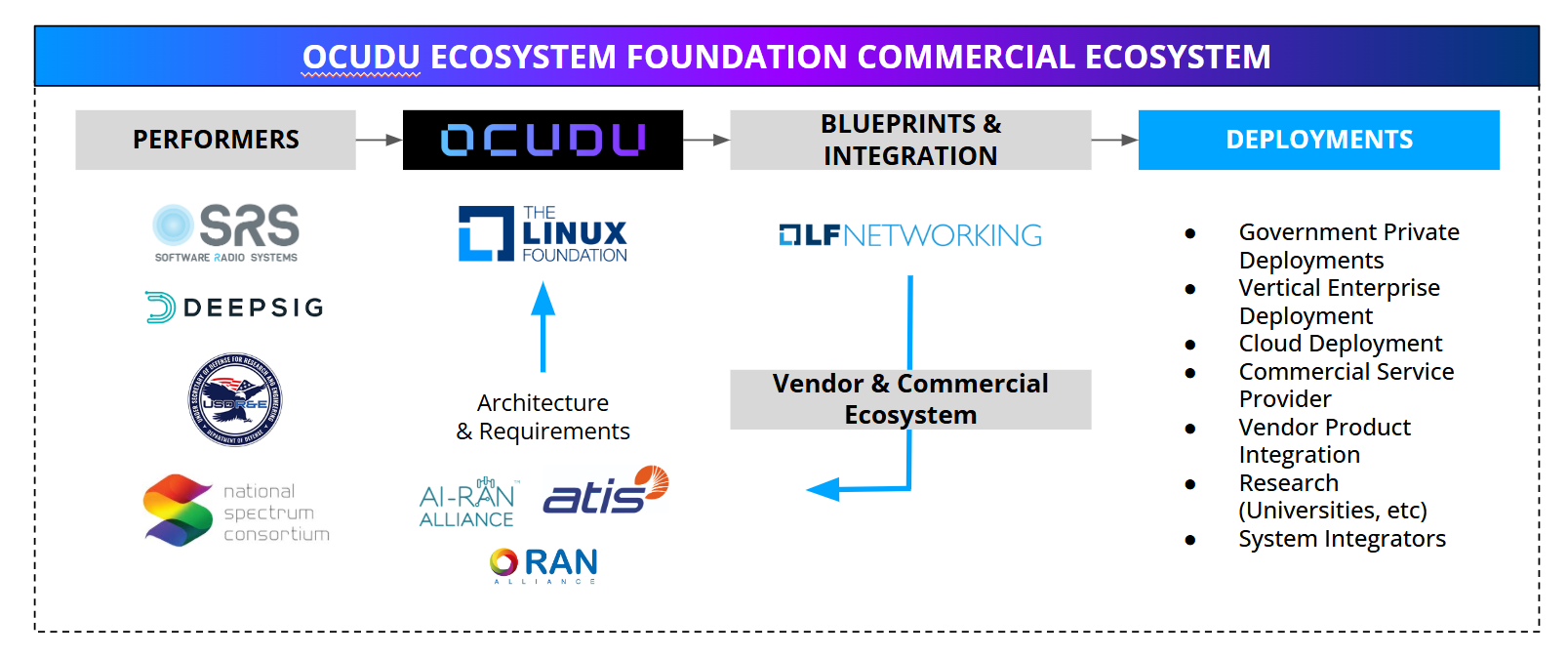
Foster global collaboration across all areas in the RAN along with end-to-end solutions based on super blueprints across other open source foundations (including documentation, testing, integration and the creation of other artifacts) that aid the development, deployment, operation or adoption of the open source project.

What is OCUDU Software, and how is it different from the OCUDU Ecosystem Foundation?

OCUDU — short for Open Centralized Unit / Distributed Unit — is the open source software that sits at the heart of a modern wireless network. The Centralized Unit and Distributed Unit are the components of a Radio Access Network (RAN) responsible for managing how mobile devices connect, communicate, and hand off data. Until now, those components were almost exclusively proprietary, locking operators into single-vendor systems and slowing down innovation. OCUDU changes that by giving the entire industry — and the world — a shared, openly governed foundation to build on.

Think of it as the Linux of wireless. Just as Linux became the operating system the internet runs on, and Kubernetes became the foundation cloud infrastructure is built on, OCUDU is designed to be the common software layer that next-generation 5G and 6G networks are built on top of. It is production-grade, carrier-tested, and designed from day one to support artificial intelligence natively — meaning networks can use machine learning to optimize themselves in real time rather than relying on static configurations.

Hosted by the Linux Foundation’s OCUDU Ecosystem Foundation project and backed by a global coalition of telecom operators, equipment vendors, chip makers, cloud providers, defense agencies, and research universities. Because it is openly governed and vendor-neutral, any organization can use it, contribute to it, and build on it,  lowering the cost of deploying advanced wireless networks, accelerating the pace of innovation, and ensuring that the software defining the next decade of connectivity is transparent, secure, and built in the open.

What the Foundation Does

The OCUDU Ecosystem Foundation is focused on creating the ecosystem conditions needed to make open source RAN implementations practical, interoperable, and deployable. Its objectives include:

  • Build the ecosystem: Create a public-private commercial and research ecosystem around open source CU,DU and peripheral components as part of Open RAN.
  • Host open source projects: House the OCUDU Technical Project and related open source projects over time.
  • Advance interoperability: Foster collaboration across the RAN lifecycle, including documentation, testing, integration, deployment, and operational artifacts that support real-world adoption.
  • Support end-to-end blueprints: Work with adjacent Linux Foundation efforts, including LFN Super Blueprints, to support integration reference implementations that bring together CU/DU, RUs,  packet core, deployment scripts, configurations, and related OSS components.
  • Promote neutral collaboration: Operate under the Linux Foundation’s neutral governance model, helping avoid vendor lock-in and ensuring no single entity controls the project direction.
View All 60+ Members

Featured Video

At Mobile World Congress 2026’s 5G Future Summit, Dr. Tom Rondeau (Principal Director for FutureG, US Department of Defense) and Mike Woster (Chief Revenue Officer at the Linux Foundation) announced the new OCUDU Ecosystem Foundation. Watch the full fireside chat and see where it all began.

The Task at hand: Create “Linux Kernel of RAN” and Define 6G in Code

Linux of Servers = Linux

Linux of Cloud =    Kubernetes

Linux of RAN =  OCUDU

The ambitions here are lofty. Just as open-source LINUX software made possible the modern internet, and open-source Kubernetes software opened up cloud computing, OCUDU is meant to open up telecommunications, Rondeau said. What’s more, he explained, it’s meant to be a “dual-use” technology that’s suitable for both a wide range of civilian applications and the military’s “very unique, very niche needs.”